
How to Know Whether Your Speaking Is Actually Improving
A three-minute recording exercise, a brief video explanation, and a free PDF progress tracker.

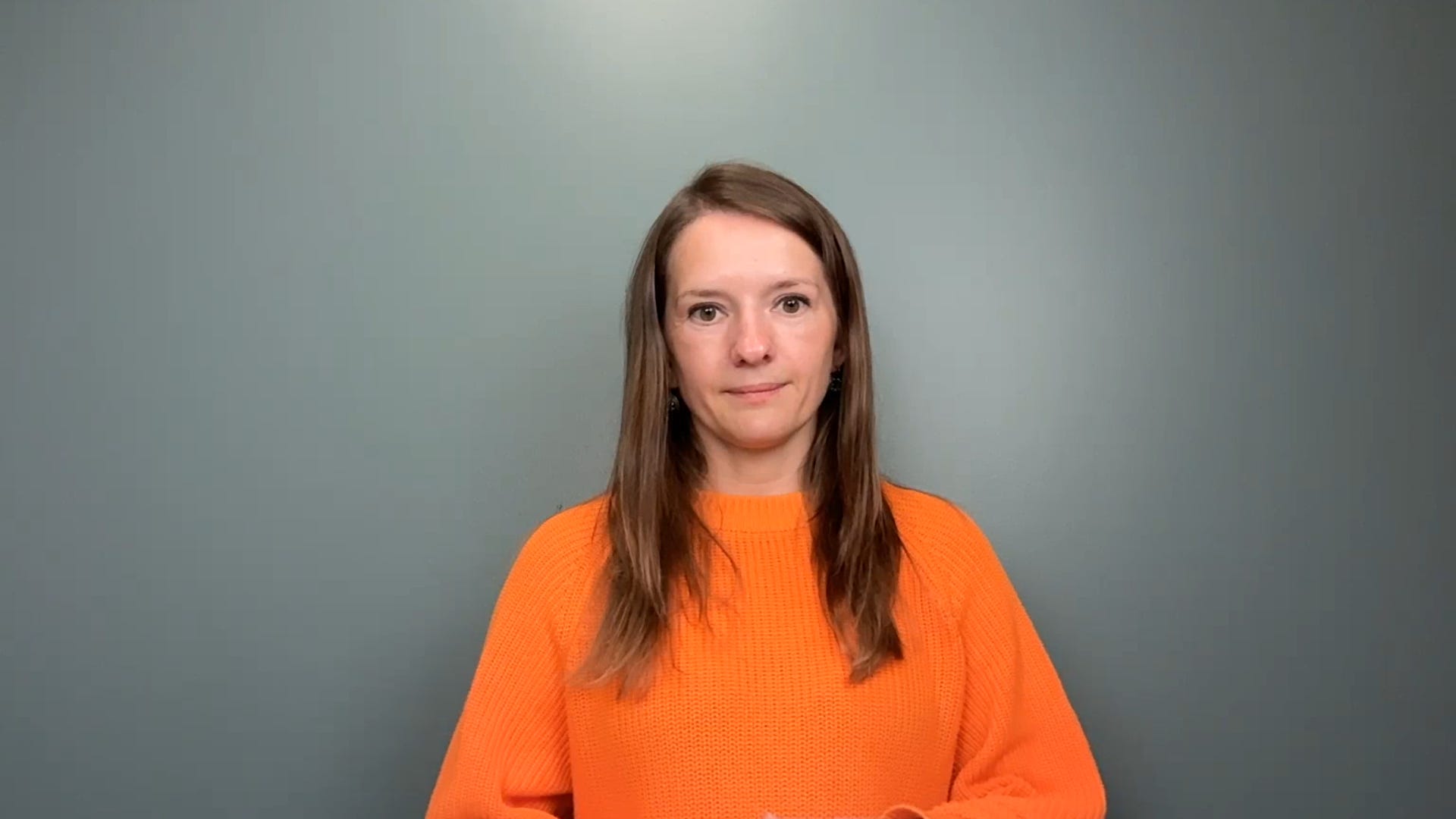
A brief note about the video
I originally sat down to record one short, spontaneous message. Once I had finished, I realised that the idea deserved a little more explanation and some scientific context. So the video came first, and the article grew around it.
You may notice that I speak quite slowly in the video. Years of teaching Swedish to beginners have trained me to slow down, articulate clearly, and give people time to process what I am saying. In ordinary conversation, I speak considerably faster.
Please forgive the teacher voice.
For the record, teaching in a classroom feels completely natural to me. I am comfortable speaking in front of people, whether in class or at a conference, explaining ideas and responding to questions.
Speaking to a camera is another matter.
The moment I press record, I suddenly become aware of every pause, repetition, facial expression, hand movement, my voice, and my accent. And trust me, I hate all of it. I feel awkward and not entirely like myself, which is probably understandable because this is only my second public recording.
A camera is still very far from being my friend. Still, I am here and practising.
And perhaps there is a parallel here with language learning. When you are a beginner, everything feels uncomfortable. You hear every mistake, notice every hesitation, and become acutely aware of yourself. You may dislike how you sound and feel embarrassed by how limited your ability still is.
But the only way to become better is to practise.
Confidence comes through practice. Skill develops through practice. Each attempt reveals the gaps that remain, giving you something specific to work on.
That is what I am doing here with the camera, and it is also what I have always encouraged you to do with languages. Start before you feel ready. Accept the discomfort. Keep going.
With that said, let us look at how a simple recording can show whether your speaking is improving, what changes to listen for, and how to compare your performance four weeks from now.
At the end of the article, I have attached a one-page PDF tracker to help you record your baseline and compare it with your speaking four weeks later.
A study streak cannot hear you speak
Most language-learning tools are very good at measuring activity.
An app can tell you how many consecutive days you practised. A course platform can count the lessons you completed. A notebook can show you pages of vocabulary, perhaps carefully organised and colour-coded.
All of this matters. I would never dismiss consistency. Regular contact with the language creates the conditions in which progress can happen.
But activity is not the same as development.
A streak cannot tell you whether familiar words now arrive more easily. It cannot tell you whether you can develop an answer beyond one or two sentences, recover when a word disappears, or correct yourself without losing the rest of the idea.
It cannot hear where you pause.
It cannot hear whether you are still assembling every phrase piece by piece or whether some language has started to move with less conscious effort.
Speaking progress is also difficult to notice from the inside. You practise today, then again tomorrow, and the difference between the two performances is usually too small to perceive.
Development often accumulates through tiny changes.
A phrase arrives a little faster. A familiar grammatical structure requires less preparation. You manage to explain an idea that you would previously have abandoned. You begin to think more about your meaning and slightly less about every verb ending.
Then the new level becomes normal.
I see this often with other learners. They have clearly improved, yet they still feel stuck because they are comparing themselves with an imagined future speaker rather than with the person they were several weeks or months earlier.
Memory is not quite reliable here. You may remember that speaking used to feel harder, but you probably cannot reconstruct exactly how long you paused, how often you repeated yourself, or what happened when you forgot a word.
A recording preserves those details.
It captures your language before memory has had the chance to smooth the edges and simplify the story. Four weeks later, you can compare two real performances rather than two vague impressions.
What do we mean by fluency?
The word fluency is often asked to perform too many jobs.
It may refer to overall proficiency, confidence, speed, grammatical command, vocabulary size, pronunciation, or the ability to survive dinner with five enthusiastic native speakers who all interrupt one another.
For this experiment, we need something more precise.
I find Segalowitz’s (2010) framework helpful because it separates three dimensions that learners often treat as one.
The first is cognitive fluency. This is the efficiency of the mental processes behind speech, including retrieving words, constructing grammatical structures, organising ideas, and preparing language for articulation.
Those hidden processes leave traces in utterance fluency, which is what you and I can actually hear in a recording. It appears in speaking rate, pauses, hesitations, repetitions, false starts, and corrections.
The third dimension is perceived fluency, meaning the listener’s overall impression. Does the speech seem to move with relative ease, or does every sentence appear to require substantial effort?
These dimensions are connected, although they do not always match.
You may retrieve familiar language efficiently while having a naturally measured speaking style. You may also produce a memorised introduction at considerable speed and then struggle as soon as the conversation changes direction.
This is why I do not want you to judge your progress by speed alone.
When researchers examine utterance fluency, they commonly look at three broad features: how quickly the speech moves, where it breaks down, and how the speaker repairs it.
Bosker et al. (2013) found that speed and pausing had a particularly strong influence on listeners’ judgments of second-language fluency. Repairs contributed less to the overall impression.
That does not make self-correction undesirable.
Suppose you say:
I went there on Tuesday, sorry, on Thursday.
You have briefly interrupted the sentence, but you have also corrected the meaning and continued. In real communication, that is a successful repair.
What is more interesting is to observe how you react when something goes wrong.
Do you correct one word and continue?
Can you reformulate the sentence when your first attempt fails?
Can you keep the message moving even when your knowledge is incomplete?
These are important signs of development, even though they do not look like perfect speech.
Where you pause matters
All speakers pause. Fluent and not fluent. Natives and non-natives. Professionals and newbies.
I pause when I need to organise an idea, choose an example, or decide how I want to formulate the next sentence. Silence itself is not evidence of poor fluency.
The more revealing question is where the silence appears.
Compare these two examples:
I moved to Stockholm in 2018.
Pause
At first, learning Swedish was quite demanding.
The pause separates two complete ideas. It gives the message structure and allows the listener to process the first statement.
Now compare it with:
I moved... to... Stockholm... in 2018.
Here, the pauses break apart a short phrase. The speaker is still searching for language while the sentence is already in progress.
The total amount of silence may be similar. The effect is entirely different.
Kahng (2020) found that pauses inside clauses may be more closely associated with the demands of second-language formulation than some pauses occurring at clause boundaries.
So when you listen to your recording, do not simply count how many times you paused.
Listen to what the pauses are doing.
Are they helping you organise the message, or are they repeatedly breaking it apart?
There is also no reason to imitate the fastest speaker you know. People differ in their natural speaking style, even in their first language. Some speak in compact bursts. Others build longer sentences and pause more frequently.
Kahng’s (2020) research suggests that second-language fluency reflects both the demands of using the new language and habits carried over from the speaker’s first language.
The comparison that matters here is personal.
You are comparing yourself with an earlier version of yourself.
Want a truly personalized learning plan based on your level, goals, and how you actually learn? I design a clear, structured, science-based system tailored exclusively for you.
Consider becoming a Founding Member.
Can a home recording measure automaticity?
Not directly.
Automaticity describes the development through which processes that initially require considerable attention become faster, more efficient, and less dependent on conscious control.
At an early stage, even a simple sentence may involve several separate decisions. You search for the word, choose the tense, check the ending, think about word order, and monitor the pronunciation, often while another person is waiting.
With practice, some of these processes can become more efficient and require less deliberate attention (Suzuki et al., 2025).
Researchers investigate automaticity through controlled tasks, reaction times, response-time consistency, and increasingly, neural measures. A three-minute recording made on your phone cannot reproduce a psycholinguistics laboratory.
It can still reveal behavioural signs that some parts of speaking are becoming easier.
Perhaps you begin sooner.
Familiar words arrive without a long internal search.
Pauses move away from the middle of short phrases and appear at more natural boundaries between ideas.
You correct a verb ending without losing the rest of the sentence.
When a word fails to appear, you describe the idea another way and continue.
These changes do not prove that your entire language system has become automatic. They may indicate that parts of speaking now require less effort.
For this experiment, that is what I want you to observe.
We are looking for audible change. We are not trying to diagnose your entire language system from a three-minute recording.
The experiment in brief
Here is the complete procedure.
Today, choose a familiar topic, prepare for one minute, and record yourself speaking for three minutes.
Save the baseline recording together with the date, topic, preparation time, and any keywords you used.
During the next four weeks, continue practising your speaking with different topics and tasks. Leave the original topic untouched.
Four weeks later, repeat the original task under the same conditions without listening to your first recording beforehand.
Compare the two recordings, paying attention to answer development, flow, pauses, repair, vocabulary retrieval, grammar, clarity, and the effort speaking required.
For an additional check, record one new but comparable topic after repeating the original one. This will help you see whether any improvement extends beyond familiar content.
Step 1. Create your baseline
Choose a topic that is familiar enough to discuss without research and stable enough to revisit four weeks later.
You could describe your usual working week, explain what you do in your job, discuss a hobby, describe your neighbourhood, talk about your reasons for learning the language, or recount a familiar experience.
Avoid a topic that depends heavily on specialised knowledge. If you choose “Explain the causes of the Thirty Years’ War,” your performance may reveal more about your historical memory than your speaking ability.
Give yourself one minute to prepare.
Write no more than three to five keywords. Complete sentences change the task into reading or recitation, which is a different kind of performance.
Then set the timer for three minutes and speak.
Record the answer in one take.
Do not restart when you choose the wrong tense, repeat yourself, or forget a word. Those moments are part of the evidence.
Save the recording together with:
the date
the topic
the preparation time
the number of keywords used
Then leave that topic alone.
Step 2. Practise speaking for four weeks
During the next four weeks, continue learning and speaking regularly.
Daily practice is welcome, although it does not need to become another burdensome ritual. Several focused sessions each week can give you repeated opportunities to retrieve, formulate, and communicate language.
Use different topics and different forms of speaking.
You might describe something that happened that day, retell a short video, answer an opinion question, explain how something works, describe a photograph, send a voice message, or speak with a tutor or conversation partner.
You can keep the same format of one minute of preparation followed by three minutes of speaking while changing the content.
The original baseline topic should remain untouched.
This may sound surprising because repeating the same speaking task can improve fluency.
Lambert et al. (2017) studied learners who repeated instruction, narration, and opinion tasks several times. Their speaking rate increased, while different kinds of pauses and self-repairs changed at different stages. The largest gains in speaking rate appeared during the earlier performances, although some changes continued later.
De Jong and Perfetti (2011) also found that repeated speaking practice could contribute to fluency development and proceduralisation. Their learners produced versions of the same speech under shrinking time limits of four, three, and two minutes.
I use and recommend task repetition because it reduces some of the burden of deciding what to say. Once the ideas are already organised, you can devote more attention to retrieving, reorganising, and refining the language.
For this experiment, however, the baseline needs to remain untouched.
If you practise the original answer repeatedly, the second recording may improve because you remember the ideas, vocabulary, and sentence patterns. You would then be measuring a mixture of broader development and rehearsal.
So repeat other speaking tasks if you find the method productive. Keep the baseline sealed, rather like a letter written to your future self.
Practice can also be distributed across time.
Kakitani and Kormos (2024) studied 116 Japanese learners of English who completed four fluency-training sessions with either one-day or seven-day intervals. Both groups showed fluency gains in posttests conducted seven and twenty-eight days later, although their development during training followed somewhat different paths.
The study does not establish one perfect schedule for every learner. It does support the value of spreading speaking practice across several sessions.
After each session, notice one problem worth addressing.
You may discover that you pause whenever you need a past-tense verb. Perhaps your vocabulary is adequate, but your answer has no clear structure. Maybe a missing word causes the whole sentence to stop, even though you could explain the idea in simpler language.
Choose one problem for the next session.
I would avoid trying to monitor pronunciation, grammar, vocabulary, speed, sophistication, posture, and eye contact at the same time. That places too much pressure on one performance and leaves very little attention for communication.
Step 3. Repeat the original task
Four weeks later, return to the baseline topic.
Keep the conditions as similar as reasonably possible.
Use the same topic, the same three-minute limit, the same one-minute preparation period, the same number of keywords, and the same rule against restarting.
Do not listen to the first recording immediately beforehand. That would reactivate its wording and content, giving you an unintended rehearsal advantage.
After completing the repeated task, record one new but comparable prompt.
For example, your original topic might be:
Describe your normal working week.
Your additional topic might be:
Describe how you would organise your ideal working week.
The first task gives you a controlled comparison. The second tests whether your speaking can still function when the content is fresh.
I recommend adding this second prompt because fluency is partly task-dependent. A familiar topic may release language relatively easily, while a new or conceptually demanding topic can make the same speaker appear considerably less fluent.
Research connecting cognitive and utterance fluency has likewise found that speaking tasks influence how underlying knowledge and processing appear in actual performance (Suzuki & Kormos, 2023).
Step 4. Listen for more than speed
Now compare the two recordings.
You do not need phonetic software, a stopwatch for every pause, or an elaborate spreadsheet. The tracker at the end of this article will guide you through the comparison.
Answer development
Did you communicate more complete ideas?
Did you add reasons, explanations, contrasts, descriptions, or examples?
Compare these two answers:
I like living in Stockholm because it is beautiful. There are many things to do, and I like nature.
I enjoy living in Stockholm because the city makes nature unusually accessible. I can work in the centre, take the underground home, and be walking beside the water twenty minutes later.
The second answer may not be much faster. It is still more developed.
The speaker has moved from stating an opinion to explaining it.
When I listen to learners, this is often one of the first changes I notice. The answer becomes less like a row of separate statements and more like a connected message.
Flow and speaking rate
Did the second answer move forward with less friction?
Could you produce longer stretches of connected speech before stopping?
Did you speak faster without sacrificing clarity?
More speed can indicate easier access to language. It can also mean that you rushed.
I would always interpret speaking rate alongside pausing, content, and intelligibility.
Pauses
Listen to where you paused.
A pause between complete ideas often helps organise the message:
Last weekend, we went to the countryside.
Pause
The children played in the garden while we cooked.
That pause creates structure.
Now compare it with:
Last weekend, we... went... to the... countryside.
Those pauses suggest that even a short phrase is being assembled under strain.
The question is not simply whether you pause.
Ask whether the pauses help organise the message or repeatedly interrupt it.
Repair and recovery
What happened when a word disappeared?
Suppose you want to say amusement park but cannot retrieve the expression.
One response is:
We went to a... I don’t know the word. Sorry. I cannot explain.
Another is:
We went to a place with roller coasters and other rides. I cannot remember the exact word, but it was outside the city.
The second version still has a lexical gap. The gap no longer controls the conversation.
I would treat that as meaningful progress.
Many real conversations are rescued through approximation, description, examples, gestures, and reformulation. Communication rarely waits while we search for the perfect word.
Vocabulary
Were familiar words easier to retrieve?
Did you use more precise or varied expressions?
Did you rely less heavily on general words such as good, nice, thing, or do when more specific language was available?
You may know approximately the same number of words after four weeks and still become much better at accessing them.
That is meaningful progress.
Grammar and sentence construction
Were your sentences more complete or varied?
Could you connect ideas with greater control?
Did familiar grammatical structures require less visible effort?
Could you correct an ending without losing the sentence that followed?
Vocabulary and grammar are not identical to fluency. They provide the material from which fluent speech is constructed.
Suzuki and Kormos (2023) found that processing speed contributed consistently to several dimensions of utterance fluency, while linguistic knowledge played different roles depending on the fluency dimension and the speaking task.
Pronunciation and clarity
Was the message easy to understand?
Did your pronunciation remain clear when you spoke more freely?
Pay attention to whether important words remained audible, whether sentence boundaries were clear, and whether increased speed made the message harder to follow.
I would never treat faster speech as improvement if the listener has to work harder to understand it.
Effort
Finally, consider how the task felt.
Could you begin after one minute, or did you feel compelled to compose the whole answer beforehand?
Were you able to think about the meaning, or was most of your attention consumed by vocabulary, verb endings, pronunciation, and word order?
This judgment is subjective, although subjectivity does not make it meaningless.
If you repeat the same procedure over time, changes in perceived effort can become informative. Language that once had to be carried piece by piece may begin to move with less conscious assistance.
Every article and PDF guide here takes weeks of research, writing, and rewriting to turn dense science into something clear you can use tonight. I’m one person doing this work with care. Upgrade to paid to get full access to everything I create and help me keep building it.
Do not expect every measure to improve together
Speaking development rarely produces a tidy row of arrows pointing upwards.
You may speak more slowly in the second recording because you attempt richer ideas.
You may make more corrections because you have become better at noticing grammatical problems.
You may pause more because the second recording happens after a sleepless night or a demanding day.
A learner can also trade one dimension of performance for another. Attempting more complex language may temporarily affect speed or accuracy. Choosing safe and familiar sentences may create smooth speech without much range.
This is why I want you to treat one pair of recordings as evidence rather than a verdict.
Look for patterns across time.
Repeat the experiment several times during the year. You may discover that your speaking rate changes very little while your pauses become better placed, your ideas become more developed, and your ability to recover improves substantially.
That is real progress.
Keep the recording you dislike
Most people dislike their first recording.
They hear the accent, the pauses, the repeated words, and every sentence that could have been expressed more elegantly. They may also become preoccupied with details that no listener would have noticed.
Keep the recording anyway.
Four weeks from now, you will need an accurate record of where you began.
Four months from now, it may reveal changes that were invisible while they were happening.
I am keeping the video at the beginning of this article for the same reason.
It is spontaneous. I speak more slowly than I do in ordinary conversation, and I remain much too aware of what my hands are doing.
Perhaps, after several more recordings, I will look back and see that I speak to the camera more naturally, organise my ideas more efficiently, and recover without analysing every imperfect sentence.
A study streak tells you that you showed up.
Your recordings may show you what showing up has changed.
Set the timer for three minutes. Make the first recording. Save it, especially if you dislike it.
Then return four weeks later and listen carefully.
Your speaking progress tracker
The one-page tracker will help you preserve the conditions of your first recording and compare the two performances across answer development, flow, pauses, repair, vocabulary, grammar, pronunciation, and effort.
Complete the first section after making your baseline recording. Return to the same page four weeks later and record what has changed.
DOWNLOAD YOUR SPEAKING PROGRESS TRACKER HERE

Tell us what currently feels hardest about speaking your target language. Is it retrieving words, developing longer answers, pausing, pronunciation, or recovering when something goes wrong? Try the experiment and return in four weeks to share what changed.
Want a truly personalized learning plan based on your level, goals, and how you actually learn? I design a clear, structured, science-based system tailored exclusively for you.
Consider becoming a Founding Member.
If this felt useful, feel free to share the post and publication with someone who might need it too.
References
Bosker, H. R., Pinget, A.-F., Quené, H., Sanders, T., & de Jong, N. H. (2013). What makes speech sound fluent? The contributions of pauses, speed and repairs. Language Testing, 30(2), 159–175. https://doi.org/10.1177/0265532212455394
de Jong, N., & Perfetti, C. A. (2011). Fluency training in the ESL classroom: An experimental study of fluency development and proceduralization. Language Learning, 61(2), 533–568. https://doi.org/10.1111/j.1467-9922.2010.00620.x
Kahng, J. (2020). Explaining second language utterance fluency: Contribution of cognitive fluency and first language utterance fluency. Applied Psycholinguistics, 41(2), 457–480. https://doi.org/10.1017/S0142716420000065
Kakitani, J., & Kormos, J. (2024). The effects of distributed practice on second language fluency development. Studies in Second Language Acquisition, 46(3), 770–794. https://doi.org/10.1017/S0272263124000251
Lambert, C., Kormos, J., & Minn, D. (2017). Task repetition and second language speech processing. Studies in Second Language Acquisition, 39(1), 167–196. https://doi.org/10.1017/S0272263116000085
Segalowitz, N. (2010). Cognitive bases of second language fluency. Routledge.
Suzuki, S., & Kormos, J. (2023). The multidimensionality of second language oral fluency: Interfacing cognitive fluency and utterance fluency. Studies in Second Language Acquisition, 45(1), 38–64. https://doi.org/10.1017/S0272263121000899
Suzuki, Y., Maie, R., & Hui, B. (2025). Research timeline: Automatization in second language learning. Language Teaching. Advance online publication. https://doi.org/10.1017/S026144482500059X
Thank you very much for sharing such detailed, vital information which sounds great to improve speaking skill.